Why Is My AC Freezing Up? Common Causes
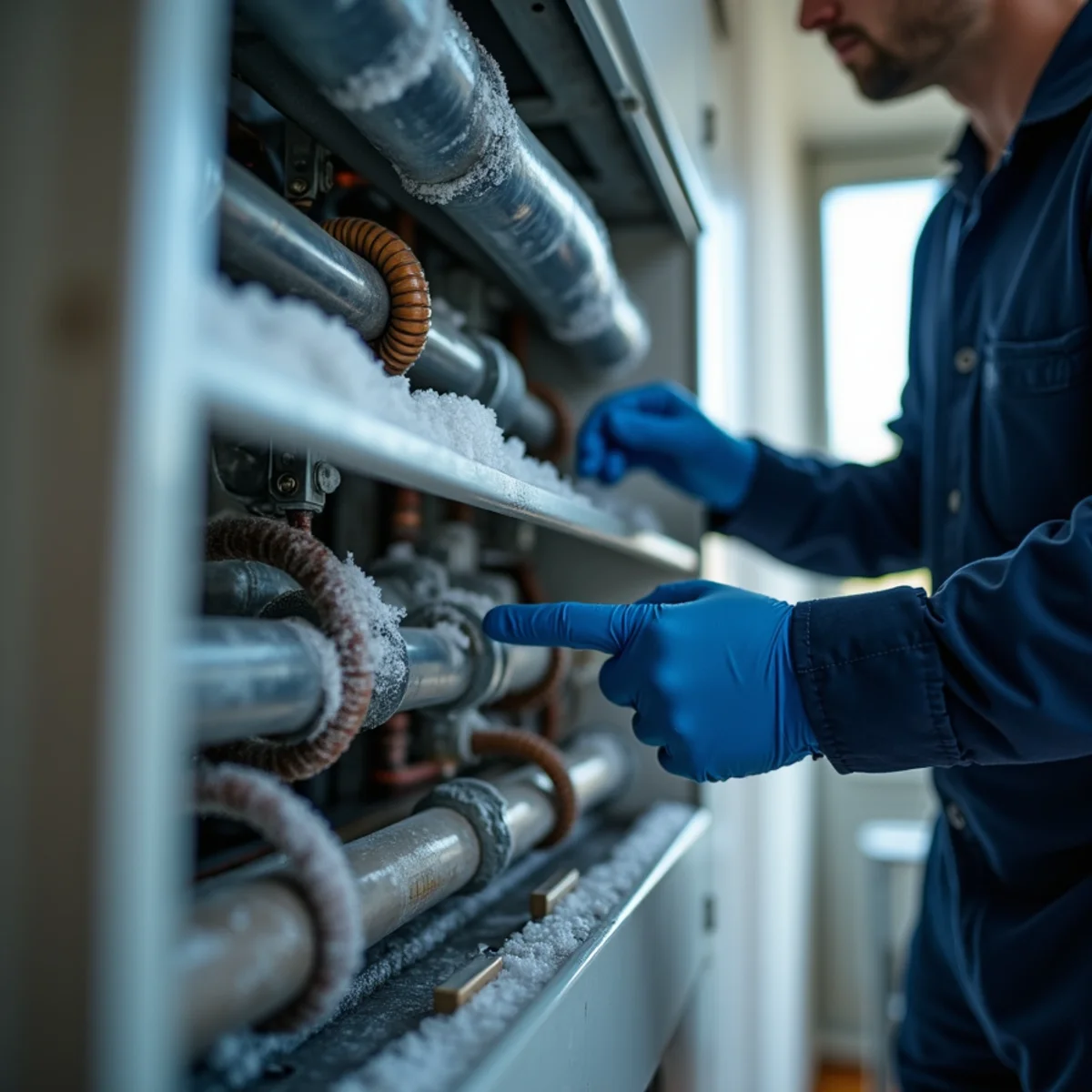
You go to enjoy some cool air on a hot Chicago day and find warm air blowing — and ice coating the refrigerant lines or the indoor coil. A frozen air conditioner is a common summer problem, and while it looks alarming, understanding the cause helps you respond correctly and prevent it from happening again.
Here are the most common reasons an AC freezes up, what to do the moment you notice it, and how to keep it from recurring.
What to Do the Moment You See Ice
Before diagnosing, stop the damage. Running a frozen system can burn out the compressor — an expensive repair.
- Turn the AC off at the thermostat (switch the fan to ON to help the coil thaw faster).
- Do not chip at the ice or try to run the system harder.
- Check and replace a dirty air filter while you wait.
- Give it a few hours to fully thaw before restarting or before a technician arrives.
Cause #1: Restricted Airflow
The most common cause of a frozen coil is restricted airflow across it. When not enough warm air moves over the evaporator coil, the refrigerant gets too cold and condensation on the coil freezes into ice.
The usual culprits are a clogged air filter, blocked or closed supply vents, dirty coils, or a failing blower motor. A dirty filter alone is behind a surprising share of frozen-AC calls — which is why regular filter changes are the single easiest prevention step.
Cause #2: Low Refrigerant
Low refrigerant — almost always from a leak, since refrigerant isn't consumed — drops the pressure and temperature in the coil below freezing, causing ice to form. If your system is low on refrigerant, simply adding more isn't a real fix; the leak has to be found and repaired, or it will happen again.
Our technicians locate and repair the leak (EPA 608 compliant) and recharge the system to the correct level, rather than just topping it off and sending you a bill again next summer.
Cause #3: Other Mechanical Issues
Less commonly, freezing results from a failing blower motor that can't move enough air, a stuck contactor, thermostat problems, or drainage issues. Running the AC when outdoor temperatures are unusually low (like an unseasonably cool night) can also cause freezing. A proper diagnosis distinguishes these from the more common airflow and refrigerant causes.
How to Prevent a Frozen AC
Most freeze-ups are preventable with basic care:
- Replace your air filter on the manufacturer's schedule — usually every 1–3 months in cooling season.
- Keep supply and return vents open and unobstructed.
- Schedule annual AC maintenance to clean coils, check refrigerant, and verify airflow.
- Address any warm-air or reduced-cooling symptoms early, before ice forms.
Why 'Just Add Refrigerant' Is the Wrong Answer
When a coil freezes from low refrigerant, topping it off is not a repair — it's a delay. Refrigerant isn't consumed, so if you're low, you have a leak. Adding more without finding and fixing the leak means you'll be frozen again next season and paying for refrigerant that's phased-out and expensive on older R-22 systems.
We find the leak, repair it, and recharge to the correct weight, all EPA 608 compliant. Just as often, though, the freeze is pure airflow — a filter nobody changed or a coil caked in dust — and the fix is cleaning and correcting airflow, not refrigerant at all. Diagnosis is what separates a lasting repair from a repeat visit.
The Polar bottom line
A frozen air conditioner is usually a symptom of restricted airflow or low refrigerant, both fixable. Turn the system off, thaw it out, change the filter, and call for service if it recurs. Regular maintenance from Polar Refrigeration & Air Control keeps your Chicago AC running cold all summer.
Related services & areas